
North Carolina Criminal Court Files
The criminal court file is the clerk's record of what the State alleged and what the court did. It differs from a police incident report, a jail booking entry, and a compiled criminal history. The file may begin with a citation, magistrate's order, or warrant return. Later filings can include an indictment, release order, counsel appointment, motions, hearing notices, plea transcript, verdict, judgment, sentence, and appeal notice. Each charge has its own sequence and outcome, so a closed case label alone does not show whether every count ended in conviction.
North Carolina has one unified General Court of Justice. District Court handles misdemeanors and infractions and also conducts early felony proceedings. A felony commonly moves to Superior Court after a grand jury returns an indictment. The elected Clerk of Superior Court keeps both divisions' records in every one of North Carolina's 100 counties. The court file for arrest records and charges remains in the county of prosecution, even though public summaries are now available through one statewide system.
Search North Carolina Criminal Records
The official eCourts Portal provides anonymous Smart Search access to public case information for all 100 counties. Search results can include a case number, county, division, parties, charges, hearings, financial entries, public document images, and disposition. Legacy depth and image availability vary. Portal is a starting point, not a replacement for the official county file or a certified judgment.
- Open eCourts Portal and choose Smart Search.
- Enter the complete file number when known. Otherwise, search the defendant's name and compare identity details carefully.
- Use the county, case type, status, or date filters shown by the live interface to narrow common names.
- Open the case and inspect every charge sequence, event, disposition, judgment, and public image. A hearing date is not proof that the hearing occurred.
- Request the underlying or certified document from the county Clerk of Superior Court through the county directory.
When Portal lacks an image, ask the clerk for the named pleading, order, or judgment. Archived paper may require retrieval time. Provide the party name, file number, document, and approximate date. A formal statewide court-based background check is also available through a clerk office or public terminal; official SBI guidance lists a $25 clerk check, but scope, certification, and the current charge should be confirmed before ordering.
North Carolina Criminal Case Stages
An arrest, warrant, or citation may start the path, but the court record grows through distinct events. A magistrate handles the initial appearance and release conditions. Misdemeanors stay in District Court. Felonies usually begin there, then move to Superior Court after indictment or another lawful route. Prosecutors can dismiss, reduce, add, consolidate, or supersede counts. The docket should be read in date order and at charge level.
Case flow: Charges Filed › Arraignment › Pretrial / Motions › Plea or Trial › Disposition › Sentencing
| Stage | What Happens |
|---|---|
| Charges filed | A citation, magistrate's order, warrant, indictment, or permitted information states the accusation. |
| Arraignment | The charges are formally presented and a plea is addressed. |
| Pretrial and motions | Entries can reflect counsel, discovery disputes, suppression, competency, continuances, and evidentiary rulings. |
| Plea or trial | A plea transcript, jury verdict, or judge's ruling records how submitted counts were resolved. |
| Disposition and sentence | The judgment states the result and any confinement, probation, fine, costs, restitution, or conditions. |
What North Carolina Criminal Records Show
Public summaries follow the same core categories across North Carolina, though presentation and document access vary. Preserve punctuation in the displayed file number. Match the county, defendant, offense date, and charge sequence before treating a result as the right person. Protected identifiers and restricted files will not appear.
| Field | What It Shows |
|---|---|
| File number and caption | Case identifier and the State v. defendant caption. |
| County and division | Filing county, Superior or District Court, location, and sometimes courtroom or judicial officer. |
| Defendant and counsel | Public identity fields, aliases where reported, and attorney representation. |
| Charges | Count, offense description, statute, class, offense date, and status. |
| Events and documents | Chronological filings, service, continuances, hearings, motions, orders, and available images. |
| Plea and disposition | The response to each charge and its actual result, such as guilty, not guilty, dismissed, or no true bill. |
| Judgment and sentence | Confinement, probation, fine, restitution, costs, conditions, and appeal entries where public. |
North Carolina Charges vs. Convictions
A charge is an accusation. A conviction follows an accepted guilty plea or adjudication of guilt. North Carolina court records can show counts that were dismissed, superseded, transferred, found not guilty, or never indicted. Those outcomes must not be described as convictions. Public visibility is also separate from guilt: an accusation may remain visible until a valid expunction order changes ordinary access.
| Charge | Conviction | |
|---|---|---|
| Stage | Accusation | Verdict or plea |
| Meaning | Formal allegation, not proof | Adjudicated guilty result |
| Possible record | Citation, order, warrant, indictment, or information | Plea and judgment or verdict and judgment |
| What to verify | Count, statute, class, and current status | Final disposition, sentence, and any appeal |
Read North Carolina Case Outcomes
“Disposed” means that the court finished an item. It does not mean guilty. Read each count for its specific result: guilty, not guilty, dismissed, prosecutor dismissal, deferred or diversion outcome, no true bill, or another recorded code. A nolle prosequi is the prosecutor's formal choice not to proceed at that time, not an acquittal. A no true bill means the grand jury did not return that accusation.
Then read the judgment. North Carolina felony classes range from A through I, while misdemeanors include A1 and Classes 1 through 3. The class does not by itself state the sentence. Prior-record level and findings can matter, and the judgment may combine active imprisonment, probation, costs, restitution, or other conditions. District Court misdemeanor convictions may be appealed for a new Superior Court trial, called trial de novo.
North Carolina Sealed and Expunged Records
A sealed record remains held but is hidden from ordinary public inspection under an order or confidentiality law. An expunction is statutory removal, destruction, or confidential treatment of a qualifying record. North Carolina has no single universal motion. Eligibility under G.S. 15A, Article 5 can depend on disposition, offense, age, prior record, sentence completion, and a waiting period.
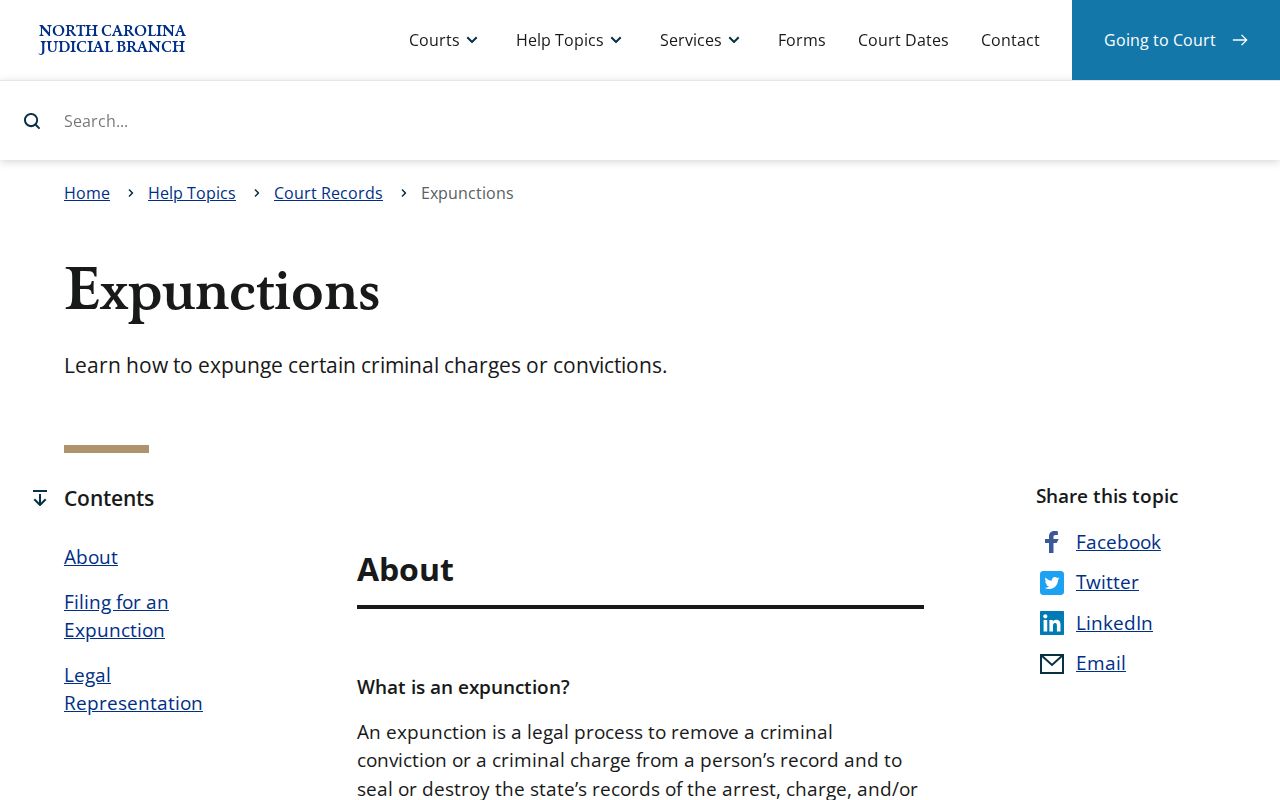
The petition goes to the Clerk of Superior Court in the county of charge or conviction, using the matching statewide AOC form. Some petitions require affidavits, district attorney service, and criminal-history checks. The general filing fee is $175, though some dismissal and not-guilty categories are fee-free and indigency relief may be available. The Judicial Branch expunction resource identifies forms and procedures.
The official expunction statute is shown in the General Assembly's published Article 5.
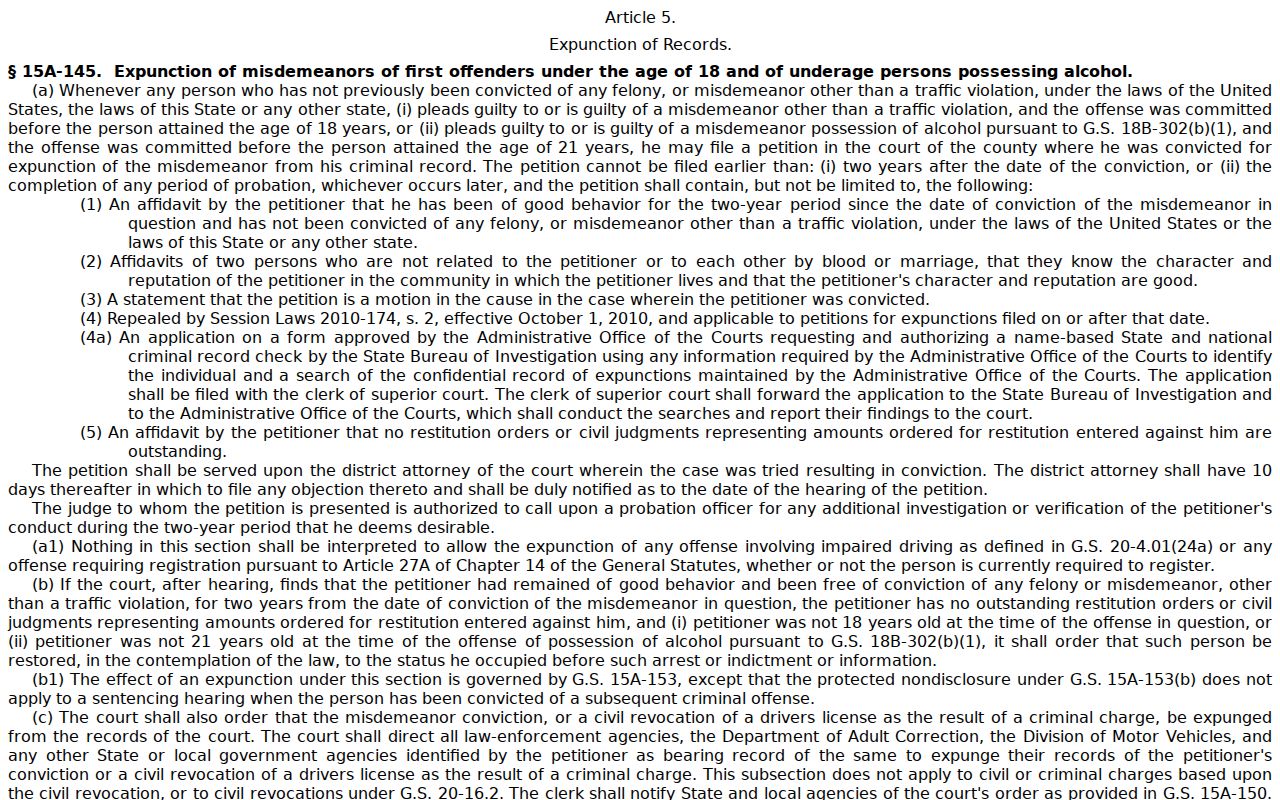
That source is controlling for the statutory categories, while the clerk handles the county filing and order.
| Sealed | Expunged | |
|---|---|---|
| Public visibility | Hidden as the law or order directs | Removed from ordinary Portal and clerk disclosure |
| Record treatment | File remains under restricted access | Covered records receive statutory removal or confidential treatment |
| Access | Requires legal authority or an order | A limited confidential index may remain for statutory uses |
Public North Carolina Criminal Records
G.S. 7A-109 directs clerks to keep criminal files, dockets, indexes, minutes, and judgments open during regular office hours unless another law bars access. G.S. 132-6 provides inspection and copying rights at reasonable times and under reasonable supervision. Those rights do not require an office to create a report that does not exist.
Key distinction: Portal provides public information and selected images. The county clerk supplies the official file and certified proof.
North Carolina Statewide Criminal History
A court file follows one prosecution. The North Carolina State Bureau of Investigation's computerized criminal history compiles fingerprint-supported North Carolina arrests and associated dispositions received by SBI. A subject can request a fingerprint-based Right to Review for $14. It requires a legible ten-print set, verified identity, the form's identifying fields, and certified check or money order. It is neither a nationwide check nor a public name-search portal.
The SBI background-check comparison distinguishes clerk searches, statutorily authorized SBI checks, correctional data, and the registry. Missing dispositions should be compared with the certified county judgment, then challenged through SBI's correction process with supporting court records.
The official Right to Review page shows the state repository's purpose and access route.
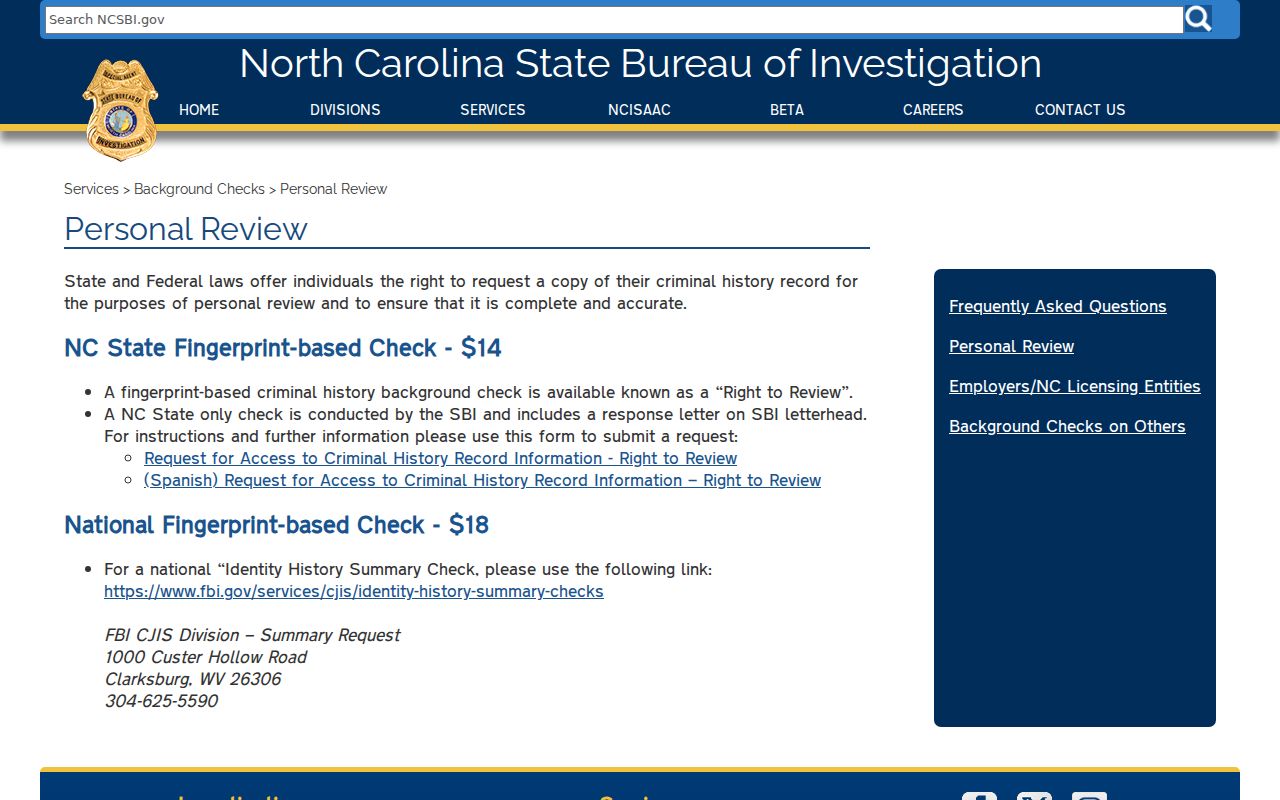
The fingerprint method helps distinguish people with similar names, but accuracy still depends on agencies sending matched arrest and disposition data.
The SBI background-check resource also explains which products answer different criminal-record questions.
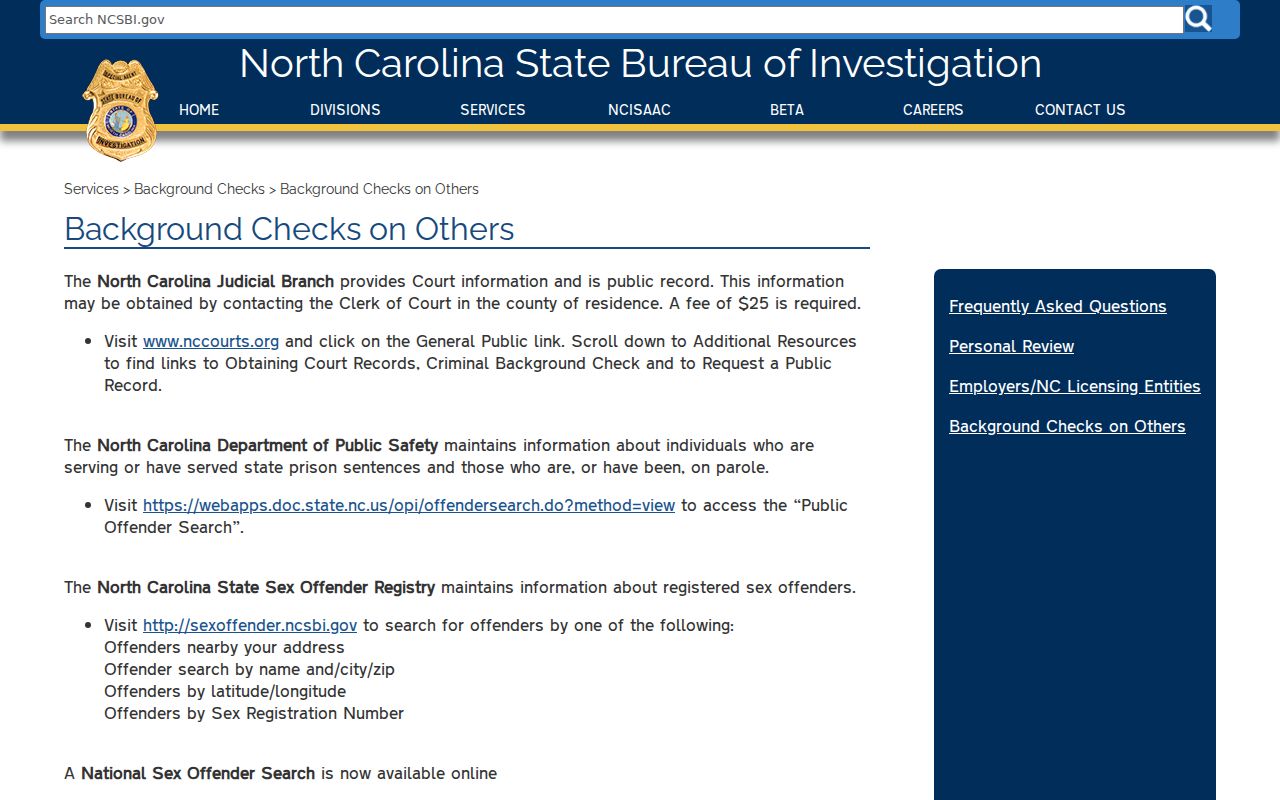
A source case document still comes from the Clerk of Superior Court, not the compiled repository.
Important: This site is not a consumer reporting agency, and its information cannot be used for employment, housing, credit, or other FCRA purposes.
Restricted North Carolina Criminal Records
Juvenile records are not ordinary public files. G.S. 7B-3000 limits inspection to specified people and agencies or authorized court access. Adoption, involuntary commitment, sealed, and expunged material is also withheld. Public documents may mask Social Security numbers, account data, protected addresses, complete birth dates, health facts, and identifying details for minors or victims.
The General Assembly's juvenile-record statute shows why a case may not appear in ordinary criminal searches.
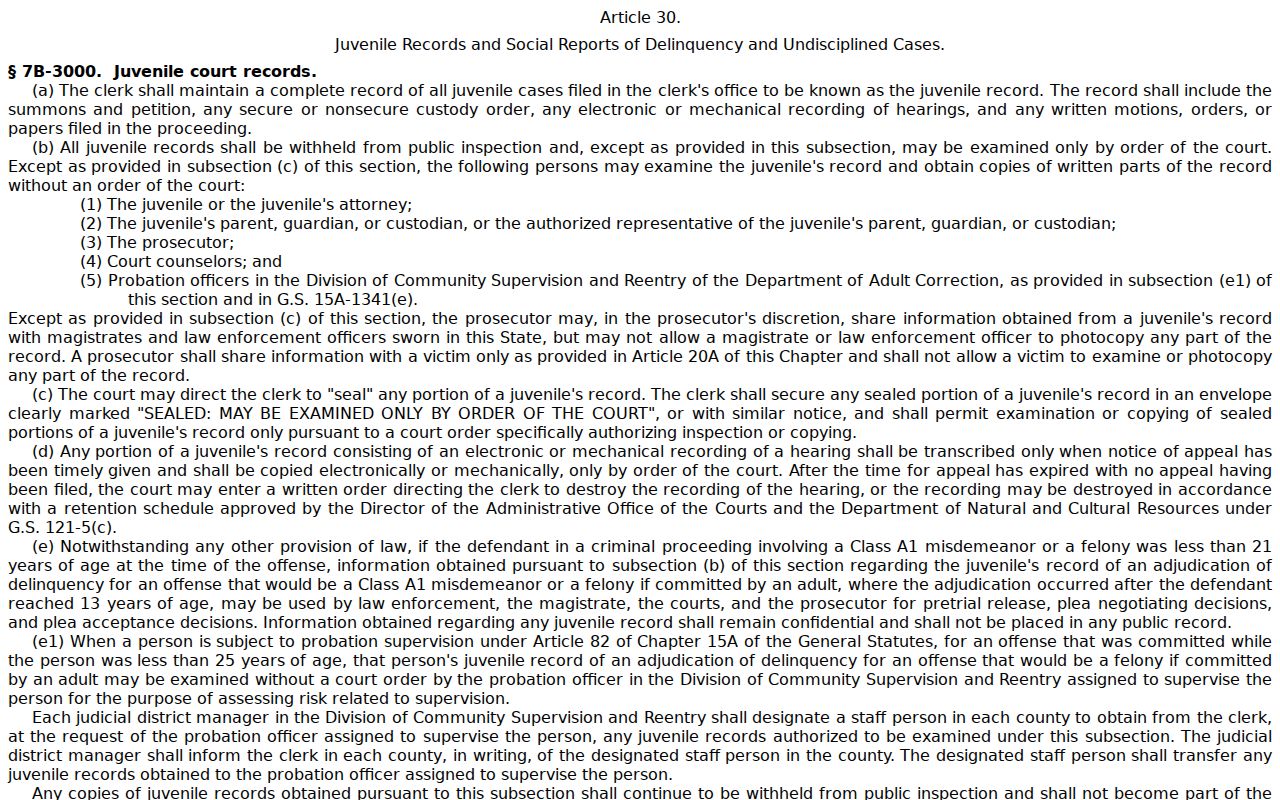
A missing result can reflect lawful confidentiality, expunction, legacy limits, or a search mismatch. It is not proof that no event occurred.
The Judicial Branch's expunction eligibility material further explains how a successful order changes public access.
For an authorized copy or a reason for denial, contact the clerk holding the record and ask for the legal basis.