
North Carolina Probate Authority
The elected Clerk of Superior Court is North Carolina's ex officio judge of probate. The clerk admits wills, appoints executors and administrators, oversees inventories and accounts, and handles year's allowance and qualifying small-estate procedures. The same office hears guardianship and incompetency matters and administers trusts, foreclosures, partitions, and other special proceedings within statutory authority.
Disputed issues may be transferred or appealed to a Superior Court judge, but the estate file remains with the county clerk. Venue normally follows the decedent's county of domicile. This clerk-centered system is statewide, yet each county holds its own original files. Use the North Carolina county directory to reach the correct estates division.
Probate authority begins with qualification, not merely possession of a will. An original will must be delivered to the estates division. A person named as executor cannot transfer estate property solely because the document names that person. The clerk reviews the application, death evidence, preliminary inventory, oath, any bond or renunciation, and the offered will. Letters testamentary or letters of administration show that the applicant has qualified and may act within the authority granted.
North Carolina Probate Terms
Estate dockets use role names that determine who acts and under what authority. These terms help distinguish a will-based administration from an estate without a will and a guardianship from decedent probate.
- Testator
- The person who made the will.
- Executor
- The person named in a will and qualified by the clerk to administer the estate.
- Administrator
- A fiduciary appointed when no qualified executor acts.
- Intestate
- Dying without a valid will, leaving distribution to statutory rules.
- Letters testamentary or administration
- The clerk-issued proof of a fiduciary's authority.
- Guardianship
- A proceeding concerning authority over a minor or an adjudicated incompetent adult.
- Conservatorship
- A protective arrangement for property or funds; North Carolina estate files more often use guardian-of-the-estate terminology.
Search North Carolina Probate Records
The statewide eCourts Portal covers estate and special-proceeding case information in all counties, though historical depth varies with conversion. Search a decedent or estate name, fiduciary, or file number. A result can identify the case and its events, but an online event is not a certified document. Old wills and loose estate papers may require a microfilm or paper archive pull.
- Identify the county where the decedent was domiciled and whether an original will exists.
- Search Portal by full name, fiduciary, or exact estate file number.
- Review proceeding type, opening date, qualification, filings, orders, and closure status.
- Contact the county estates division for missing images or historical material.
- Request certified wills, letters, or orders from the Clerk of Superior Court.
The official Wills and Estates resource explains North Carolina probate paths:
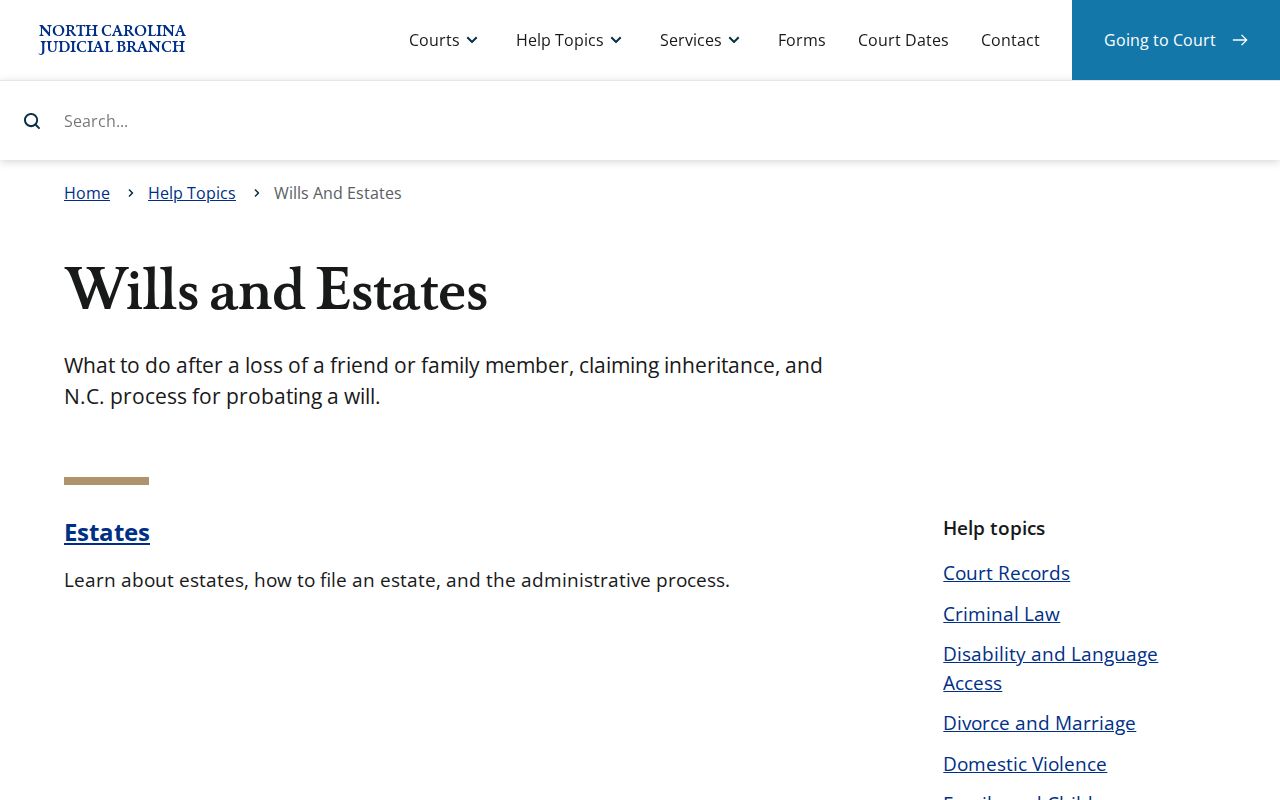
Use its current forms and procedure descriptions, then file with the proper county clerk.
Search terms should match the kind of proceeding. For a decedent estate, try the full legal name and known date of death. For guardianship, search the respondent and petitioner. A fiduciary's name can find an estate when the decedent's spelling is uncertain. Once a likely result appears, compare county, file number, proceeding type, and opening date. The county estates office can then identify whether a requested will, letters, inventory, account, claim, or closing order is publicly available.
North Carolina Probate County Routing
Each North Carolina county elects one Clerk of Superior Court. That office keeps estate records and exercises probate authority for the county. There is no separate statewide probate clerk and no independent local Probate Court. A person who finds a statewide Portal entry still contacts the county named in the case for an original or certified filing.
Find the probate office: Browse the directory of all 100 North Carolina counties, then contact the Clerk of Superior Court estates division for that county.
North Carolina Probate Fees
The Judicial Branch publishes a current Estates Court Costs chart. Charges depend on the procedure and can include opening, inventory or percentage-based amounts, copies, commissions, service, publication, bond, or related filings. Confirm the amount with the county estates office before mailing payment. Indigent status may be available where law permits.
Fees can arise at several stages. Opening an estate is separate from later inventory charges, fiduciary commissions, certified letters, publication, or a contested motion. Guardianship may add service and guardian ad litem costs. A bond or professional appraisal is not necessarily a clerk fee, but it can still be an administration expense. The safest request names the procedure and desired document so the clerk can quote the correct current total.
| Item | Amount |
|---|---|
| Estate opening or administration | See current Estates Court Costs chart |
| Inventory or estate-value charge | Depends on procedure and estate |
| Letters and certified copies | See current Miscellaneous Costs chart |
| Guardianship or special proceeding | See current Special Proceedings chart |
| Service, publication, bond, or guardian ad litem | Additional when applicable |
What North Carolina Probate Records Show
An estate file can contain the original will and codicils, probate application, oath, bond, renunciations, letters, creditor notices, claims, year's allowance, inventories, annual or final accounts, receipts, petitions to sell property, commissions, and closing orders. The file number should be copied with its exact punctuation. Portal events can show when the estate opened, when a fiduciary qualified, whether an inventory or account was filed, and whether the matter closed or reopened.
Guardianship records add the petition, service, guardian ad litem appointment, competency evidence, adjudication, appointment, bond, and accounts. Trust, foreclosure, and partition files may be indexed as special proceedings instead of decedent estates. Public availability depends on the document, not just the case label.
After qualification, the fiduciary identifies and safeguards assets, gives creditor notice as required, and preserves proof of publication or mailing. Estate and personal funds must remain separate. North Carolina materials commonly call for an inventory within 90 days after qualification, followed by annual or final accounts with supporting vouchers. Valid administration costs, family allowances, creditor claims, and taxes are paid in the lawful order before distribution. A disputed claim, insolvent estate, wrongful-death recovery, or spousal-right issue can require a different process.
Closing is a documented step. The fiduciary should distribute only after authority and liabilities are clear, obtain receipts or releases, and submit the required final account for clerk review. A later asset or unresolved matter may lead to reopening. Portal status therefore helps locate the file, but the filed account and closing order show what the clerk actually approved.
| Field or Event | Meaning |
|---|---|
| Proceeding type | Testate, intestate, collection by affidavit, summary administration, year's allowance, guardianship, or special proceeding. |
| Applicant or fiduciary | Executor, administrator, collector, guardian, public administrator, and counsel. |
| Qualification | Application, oath, bond, and date letters were issued. |
| Notices and claims | Creditor publication, service, claims, allowances, and related proof. |
| Inventory and accounts | Asset totals, administration activity, and final reporting, with protected account data redacted. |
| Disposition | Orders, distributions, commission, closing, or reopening. |
Restricted North Carolina Probate Records
Most filed estate papers are inspectable, but public access does not expose every detail. Social Security numbers, financial-account numbers, tax records, medical and competency evidence, confidential addresses, and sealed documents remain protected. Guardianship evidence can receive tighter controls than an ordinary estate inventory. A Portal docket may reveal that an event or order exists while withholding its image.
A public request also does not create the rights of an heir, beneficiary, creditor, or fiduciary. Those rights depend on law and the case. Ask for the segregable public portion of a file when an exhibit contains protected information. Certified letters, wills, and orders come from the county clerk.
Find North Carolina Probate Offices
Start with the decedent's domicile, not the location of every asset or family member. Browse the full directory of all 100 North Carolina counties and select the likely county. Give the estates division the decedent's full name, date of death, known fiduciary, file number, and requested document. A precise request helps the clerk distinguish an estate from a guardianship or special proceeding and retrieve older paper.
North Carolina procedure also distinguishes formal administration, Collection by Affidavit, and Summary Administration. A small-estate path depends on the current threshold, waiting period, asset calculation, liens, and allowances. Do not rely on a static dollar limit. The live form and clerk instructions control.
Collection by Affidavit focuses on qualifying personal property after the statutory wait and within the current calculation. Summary Administration serves a different statutory setting, while formal administration uses a qualified executor or administrator and ongoing clerk oversight. Real property, liens, spousal allowances, and the identity of successors can change the right path. Guide & File may prepare supported probate or guardianship forms, but preparation does not decide eligibility, file the papers, or replace the clerk's review.
Probate can overlap with federal bankruptcy without merging the systems. The official bankruptcy courts for the Eastern, Middle, and Western districts maintain federal files:
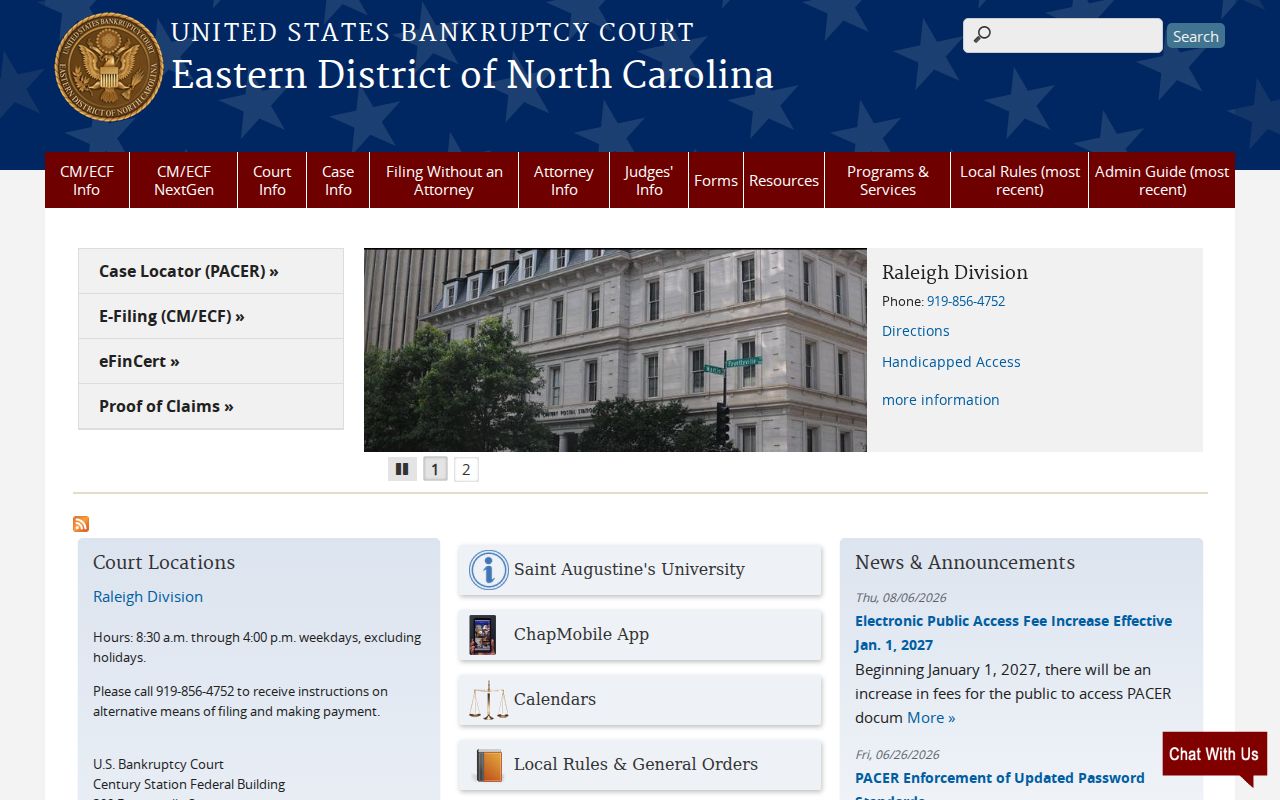
The Eastern District resource is separate from a county estate administration.
The Middle District bankruptcy court provides its own federal case source:
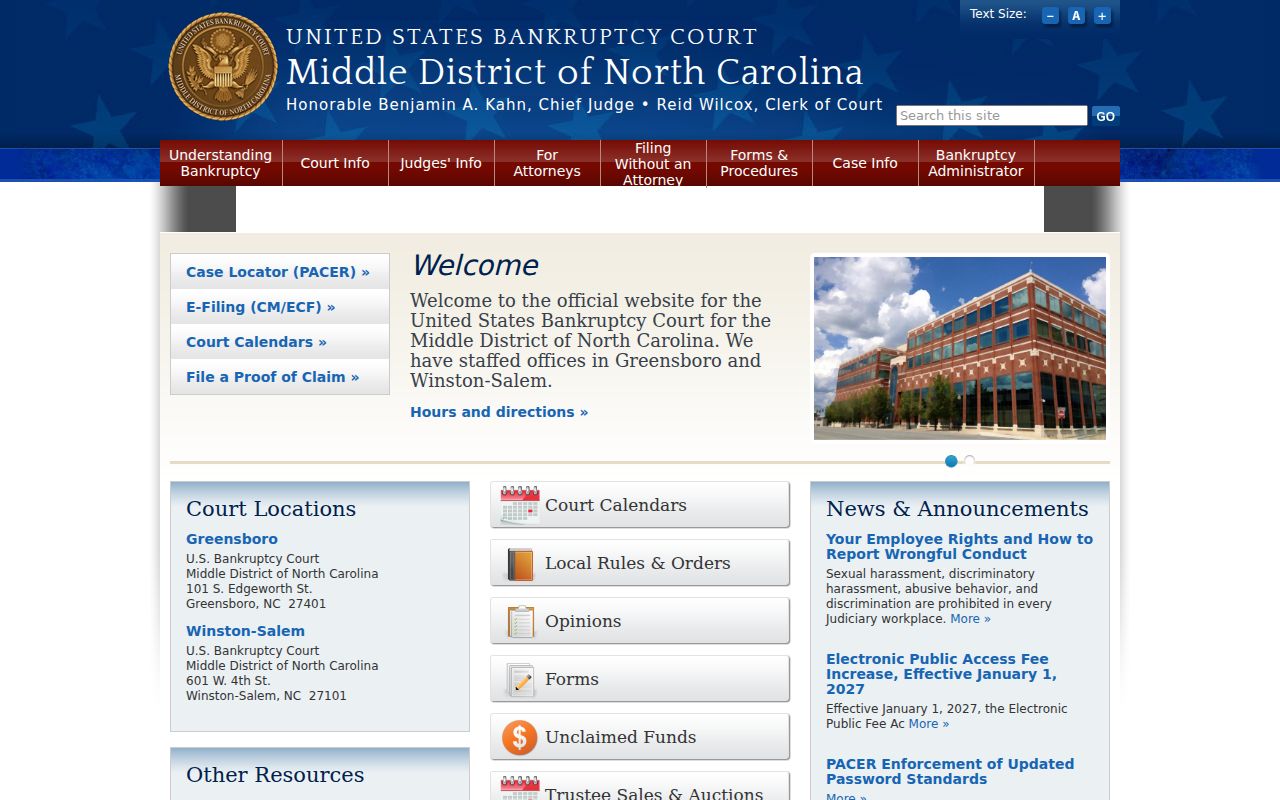
The Middle District likewise keeps federal bankruptcy schedules and claims outside the state probate file.
The Western District bankruptcy court supplies the corresponding federal resource for western North Carolina:
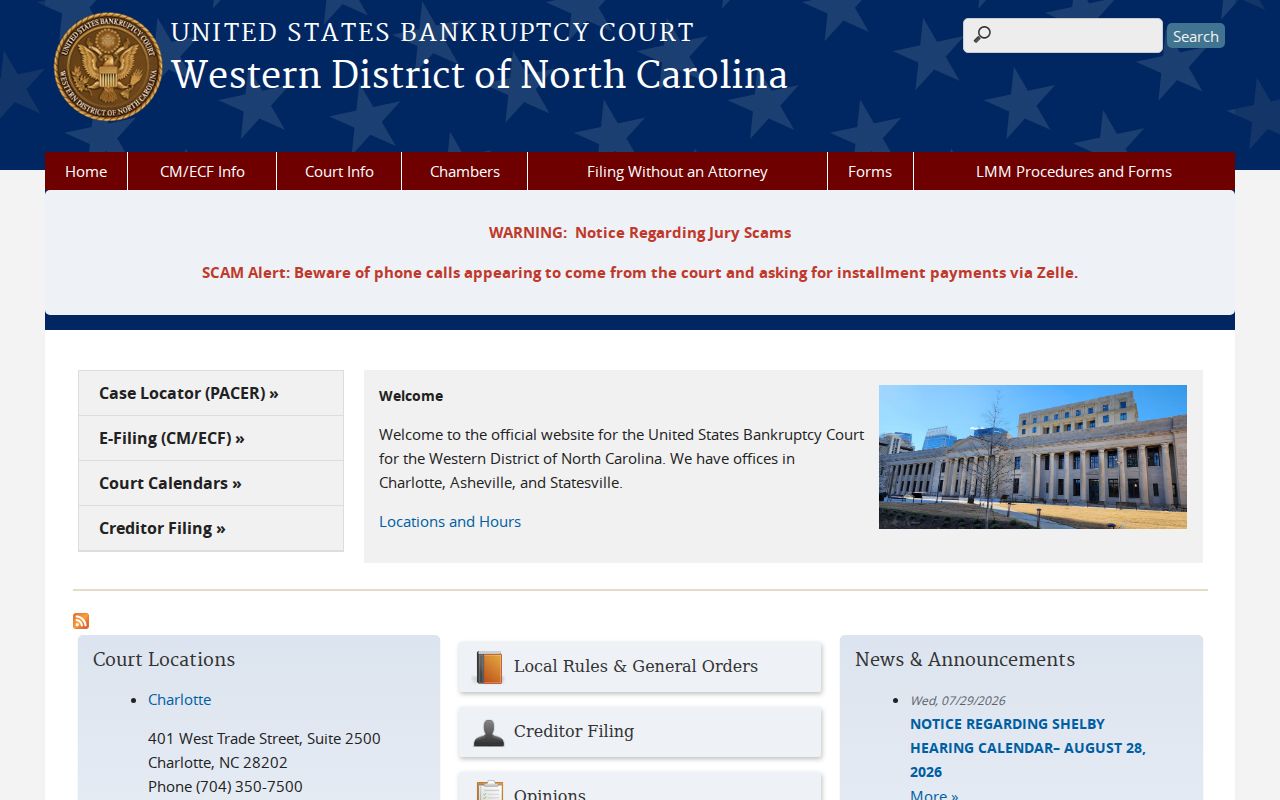
Use the Western District only for its federal bankruptcy docket. The Clerk of Superior Court still holds the North Carolina will and estate record.