
Active Warrants in North Carolina
North Carolina magistrates issue much of the state's initial criminal process. Judges can issue orders for arrest and other process in pending cases. Sheriffs execute and track service within their jurisdictions. The Clerk of Superior Court keeps the related District Court or Superior Court file. Traffic and misdemeanor failures to appear remain in District Court, while felony process can connect to Superior Court.
No official public statewide active-warrant database exists. Restricted law-enforcement systems contain more process data than the public eCourts Portal. Portal may reveal a related case, called-and-failed event, bond forfeiture, failure to appear, or order for arrest. An absent entry does not clear a person. Use the North Carolina county directory to reach the clerk and sheriff in each likely county.
County confirmation has two parts. The clerk can explain public file and process status, provide copies, and identify the court procedure. The sheriff can address service, booking, and its own confirmation policy. Neither a clerk nor an online page can promise that appearing at an office will avoid arrest. When a record is time-sensitive, verify it directly before relying on a cached result or an old wanted notice.
North Carolina Warrant Types
The label and authority matter. Some process starts a criminal accusation. Other process enforces a missed hearing, supervision term, extradition demand, or civil order. Search-warrant materials can remain unavailable before execution or while disclosure could harm an investigation.
- Arrest warrant: authorizes custody of the named person based on a sworn probable-cause showing.
- Order for arrest: compels custody after a missed appearance, violation, noncompliance, or another judicial event.
- Search warrant: authorizes a search of the described person, place, or property for specified evidence.
- Fugitive process: supports custody for another jurisdiction's demand and identifies the requesting authority.
- Supervision process: responds to alleged probation or parole violations and differs from a new criminal charge.
- Civil enforcement: contempt or child-support process can result in custody but remains tied to a civil or domestic file.
Search North Carolina Warrant Records
Begin with every county tied to the citation, arrest, former address, alleged offense, or missed hearing. Search the eCourts Portal for the full name, file number, or citation. Review the register of actions and hearings. Portal is statewide case information, not warrant clearance.
Collect the full legal name, aliases, birth date or age, possible file number, citation number, and county before calling. Some sheriffs decline to confirm active process by phone for safety or identity reasons.
- Search Portal for the name, citation, and file number in every likely county.
- Call the Clerk of Superior Court criminal division with the file number and ask for public process status.
- Contact the sheriff's warrant or criminal-process unit through its official published number.
- Check District Court traffic or misdemeanor matters and Superior Court felony matters.
- Have a licensed North Carolina defense lawyer confirm status and arrange the safest lawful response.
The official statewide eCourts Portal is useful for linked case events.
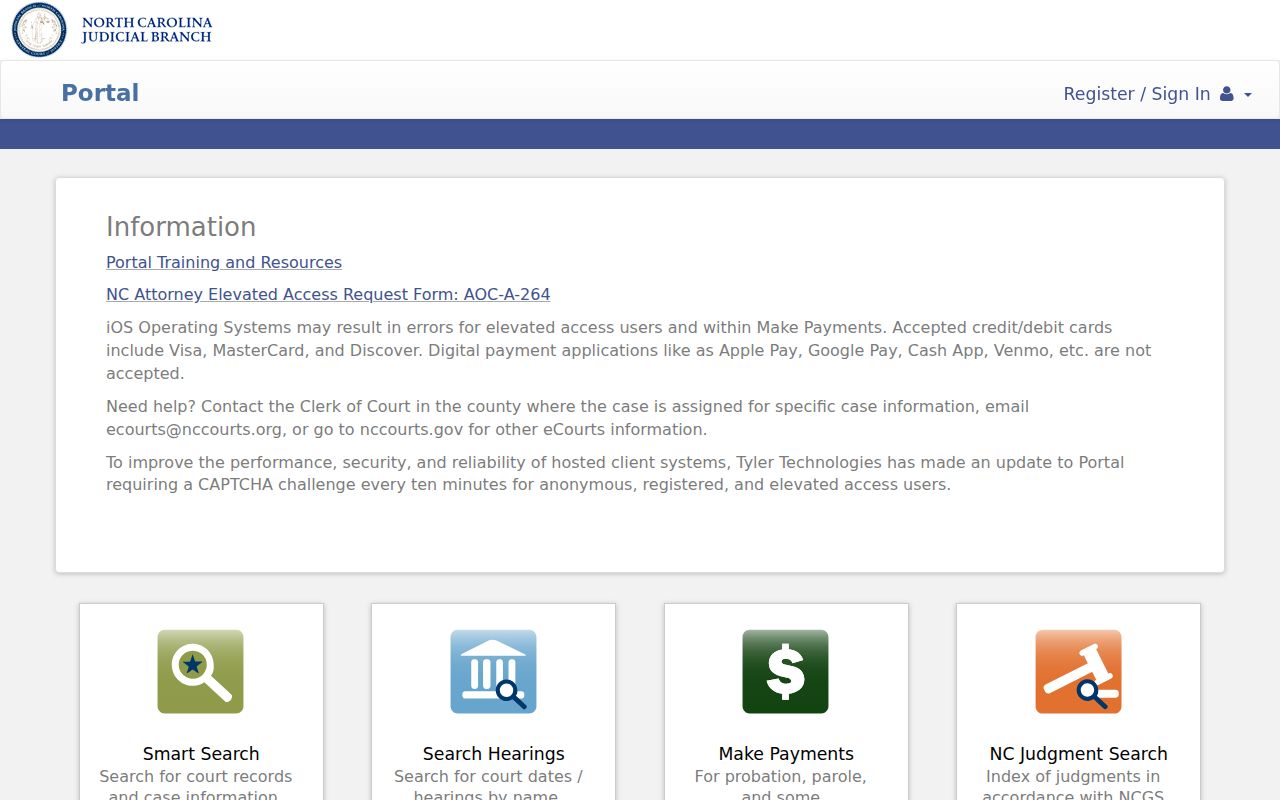
The interface cannot be treated as a definitive active-warrant roster because restricted process may not be public.
A traffic failure to appear deserves special care. A called-and-failed entry may precede failure-to-appear reporting, bond consequences, and an order for arrest, depending on the case. Search the citation and the person's name, then ask the District Court clerk about the current event and next setting. If NCDMV action followed, clearing the court matter may not by itself complete the driver-license restoration process.
North Carolina Warrant Verification Fields
Research found no honest statewide public warrant-search field table because no such public interface exists. County policies and sheriff tools vary. These identifiers help an official distinguish similar names. Do not send sensitive data through an unverified form.
| Field Label | Type | Required | Notes |
|---|---|---|---|
| Full legal name and aliases | Identity | Yes | Confirm spelling used in the case. |
| Date of birth or age | Identity | When requested | May be partly redacted in public records. |
| File, citation, or process number | Case | No | The strongest route to the matching record. |
| County and division | Jurisdiction | Yes | Directs the inquiry to the correct clerk and sheriff. |
What North Carolina Warrant Records Show
A public case file or confirmed process record may show name and aliases, limited age or birth information, physical descriptors, file or process number, charge and statute, issuing county and court, judicial official, issue date, service status, bond details, law-enforcement agency, and a related court date. The exact public fields vary by record and custodian.
Read each field in context. “Issued” is not the same as “served,” and an old bond entry may have changed after a hearing. A case event can refer to process without showing its affidavit. Search-warrant returns may become part of a file after execution, while the supporting material can remain sealed. A sheriff wanted entry may add a photograph, caution language, and a tip contact, but its selective nature prevents use as a complete county index.
| Field | What It Shows |
|---|---|
| Process or file number | Identifier connecting process to the court file. |
| Named person | Name, aliases, and limited descriptors used for identity. |
| Authority and allegation | Process type, charge, statute, and reason for issuance. |
| Issuing details | County, court, judicial official, and date. |
| Bond and status | Release terms and active, served, recalled, or other status when public. |
North Carolina County Warrant Routes
North Carolina's 100 counties each have an elected Clerk of Superior Court and a sheriff. Those offices are the operational route. The Judicial Branch Locations directory identifies official county court contacts.
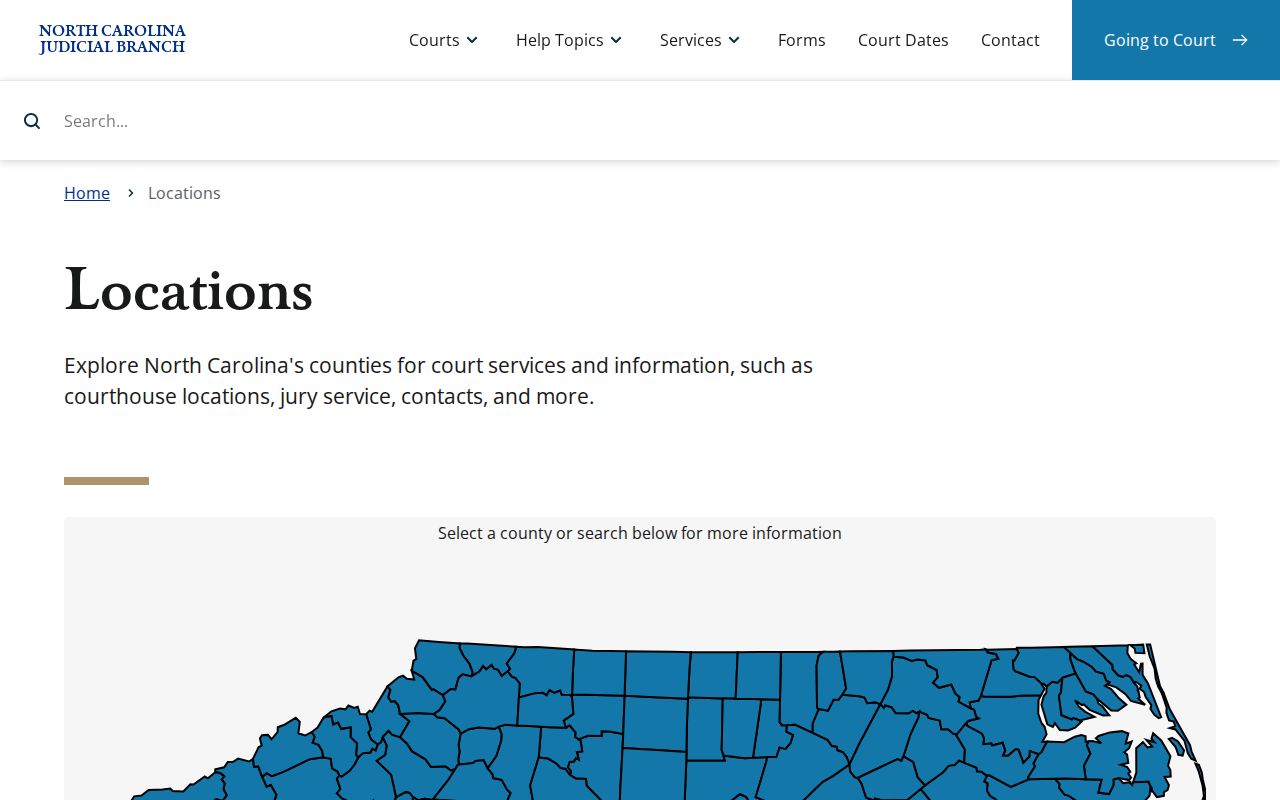
Use the matching county page to reach the official clerk, then verify the sheriff through that county's government site. A public “most wanted” list is selective publicity, not a full roster. Direct policies vary, so confirm how current any published entry is.
When the county is uncertain, check the place of the alleged offense, citation, arrest, former residence, and missed court date. One person can have process in more than one county. Search name variants and preserve any complete file number. North Carolina's unified Clerk of Superior Court structure means one clerk office in the county maintains both District and Superior Court records, but the criminal division may use a dedicated counter or phone route.
Resolve a North Carolina Warrant Safely
Do not assume an in-person inquiry is risk-free. A sheriff can arrest a person who appears on active process, and clerk staff cannot promise immunity or advise whether to surrender. A defense lawyer can inspect the file, confirm the process holder, seek a hearing, address bond, or ask the court to strike a failure to appear when law allows. Only the court or process holder can clear it.
If surrender is required, confirm location, time, transport, medication needs, and lawful bond arrangements. Never send money to an unsolicited caller who claims a warrant exists. Court money is paid through official Portal or county channels. After resolution, obtain the new order or disposition and verify the updated status. A traffic failure may also require separate NCDMV restoration steps.
Important: Consult a licensed North Carolina lawyer before surrendering or appearing in person because direct contact can result in immediate arrest.
North Carolina Tips and Wanted Lists
Research did not identify one statewide Crime Stoppers warrant portal. Local and regional programs accept tips under their own rules, and sheriff wanted pages cover only selected people. Use the official program listed by the relevant sheriff or police agency. Do not confront a wanted person. For an emergency, contact law enforcement through its emergency channel rather than a web form.
Restricted North Carolina Warrant Records
Unexecuted search-warrant affidavits and returns may be sealed or temporarily unavailable to protect an investigation. Juvenile process is confidential. Expunged or judicially sealed process is absent from ordinary searches, and safety or protected identity data can be redacted. Federal warrants belong to federal courts and law enforcement, not county court records.
A focused public-record request may obtain an existing served and public warrant or log. The agency need not create a statewide list, and it can withhold lawfully restricted investigative or safety information. Ask for the legal basis if access is denied and narrow the request to segregable public material.
Public access under G.S. 7A-109 generally keeps court files and indexes open unless another law prohibits access. G.S. 132-6 supports inspection and copies of public government records at reasonable times. These statutes do not convert confidential process into a public record or require a custodian to create a warrant-search database.
Identity errors carry real risk. Compare the complete name, aliases, approximate age, county, file number, charge, issue date, and issuing authority before deciding a record belongs to someone. Common names and stale wanted pages can mislead. Do not publish a home address, protected identity, or other sensitive detail simply because one field appeared in an old result. The issuing clerk and serving sheriff remain the best sources for current public status.
After a warrant is served, custody and bond information can move to the jail roster while the case proceeds in court. The arrest does not prove the underlying charge. Read later Portal events and obtain the clerk's judgment for the final result. If the process was recalled or an appearance rescheduled, keep the written court order rather than relying on a phone note.